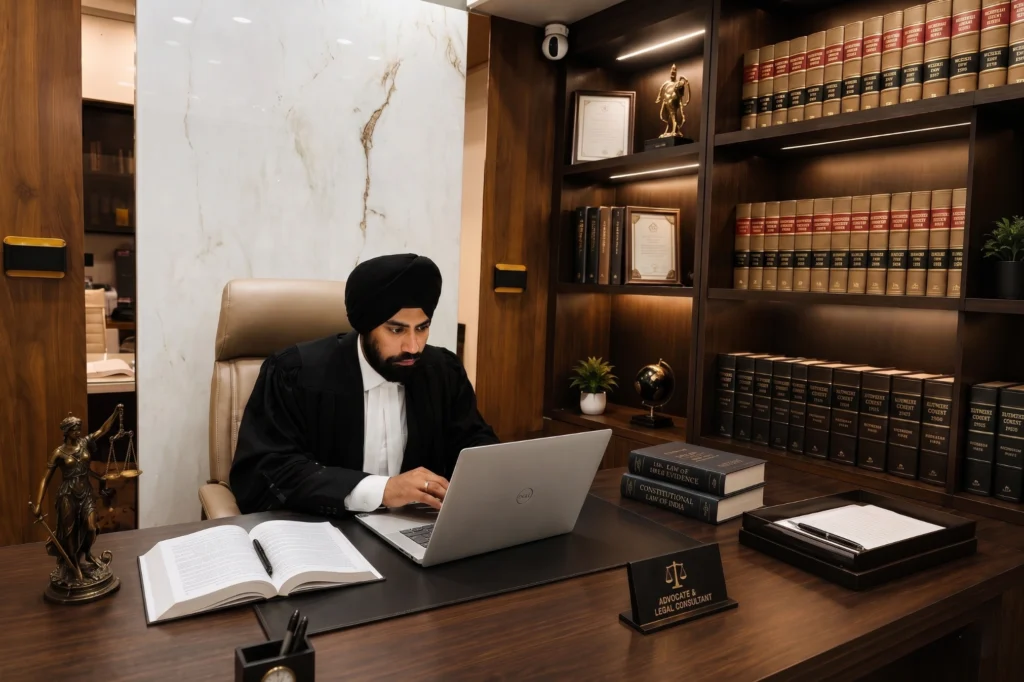



Mutual Divorce in India: Legal Process & Rights
Not all marriages end in messy fights and hatred. In some cases, both individuals realise that the relationship will not work out anymore. Perhaps, you made many attempts at reconciling your differences and holding an open conversation about the future. Yet, you have reached the conclusion that continuing your marriage would be a mistake.
Mutual divorce provides a peaceful solution to separating from your spouse under such circumstances. This form of divorce allows for a mutual decision, without resorting to prolonged court proceedings.
The mutual divorce procedure in India is typically quick and straightforward. First, the couple submits their joint application to the court. Afterwards, the court documents their declaration and asks them to observe the cooling-off period. If the couple is sure that they want to go ahead with the divorce proceedings, they confirm their acceptance once more for the court to grant the divorce. This process may take between six months and one-and-a-half years or even more.
If you are thinking of getting a divorce or have received a letter stating your spouse’s intention to initiate the divorce proceedings, then you should first familiarise yourself with the law before contacting a mutual divorce lawyer in Delhi.
Types of Mutual Divorce and Marital Claims in India
Mutual divorce procedure in India is categorised based on the scenarios or conditions of the separation and the procedural path chosen by the couple. These are the primary types based on different scenarios:
Standard Mutual Divorce (One-Year Scenario)
This is by far the most frequently followed route under the Hindu Marriage Act, 1955 or the Special Marriage Act, 1954. They have been married for more than a year and realise now that their marriage is not working and that they require a divorce. However, prior to divorcing them in accordance with these laws, they were separated from each other for one year and decided that they cannot live together anymore. This type of mutual divorce has a mandatory waiting period of 6 months after the initial filing and before the final decree.
Expedited Mutual Divorce (Cooling-Off Waiver Scenario)
This is the kind of divorce where both spouses wish to avoid the cooling-off period. The two have come to the conclusion that there is nothing more to save regarding their marriage (their marriage is irretrievably broken). All questions, like spousal maintenance, child custody, and division of assets between the parties, are resolved by a Memorandum of Understanding (MoU). In this case, the two can make a request to waive the cooling-off period.
In Amardeep Singh v. Harveen Kaur, the Supreme Court ruled that the 6 months is not mandatory. If the couple has been separated for more than 18 months, without the possibility of reunion, and have settled all their issues in an amicable manner, then they may be able to forego the cooling-off period..
Living Under the Same Roof (Mental Separation)
Even though they stay in the same household, the couple may decide on mutual divorce proceedings. Under the Sections 13B and 28 of the Hindu Marriage Act and Special Marriage Act respectively, ‘living separately’ doesn’t necessarily mean living in different households. When the couple stays under the same roof for more than a year, but have no emotions or physical connection, they can divorce each other.
Voidable Marriage
Some marriages look valid but have serious problems that were hidden at the start. If your husband or wife was not able to consummate the marriage, was mentally unfit to agree to the marriage, or if you were forced into the marriage against your will, you can ask the court to cancel it. If your wife was already pregnant by another man at the time of the marriage, that is also a valid reason to cancel it. You must file this request within 1 year of finding out the problem and must not have continued living together after finding out.
Judicial Separation
Judicial separation is a legal way for a husband and wife to live apart without ending the marriage. You can apply for it if your husband or wife is abusive, unfaithful, or suffering from a serious mental illness. Unlike divorce, you can file for judicial separation at any time after your marriage. Once the court grants it, you can live separately, claim monthly maintenance, and have child custody and property rights decided by the court. This does not end the marriage, but after 1 year of separation you can file for a full divorce if you want to.
NRI Divorce Law
NRI divorce is for couples where the husband or wife is living abroad and cannot come to India for court hearings. A divorce lawyer can help by setting up an NRI Power of Attorney, which allows a trusted person to appear in court on your behalf. The divorce can be mutual or contested based on your situation. Common reasons include false promises of settling abroad, abandoning the husband or wife after moving to another country, or secretly marrying someone else while still legally married. If a divorce order is obtained from a foreign court without informing you, it will not be valid in India under Section 13 of the Civil Procedure Code.
Process & nProcedure
What is the Court Procedure in A Divorce?
No matter what type of divorce you are filing for, the court process broadly follows the same path. Many people feel nervous and confused when they first think about going to court. It is completely natural to feel that way. But when you understand each step clearly, the process becomes much less scary. Whether you are filing a mutual divorce or a contested one, here is exactly how it works, step by step.
-
Joint Petition
In a joint divorce filing, both spouses file the petition together, detailing the grounds for divorce and the conditions agreed upon between them like maintenance, custody of children, and repayment of stridhan. In case either one of the spouses belongs to Delhi, then their divorce petition would be made to the Family Court in Delhi.
-

First Motion
Once a joint petition has been filed, both parties will come to court and declare that they are willing to divorce. This will be recorded by the judge, who will verify the forms for any threats of fraud.
-

Application for Waiver (if any)
If you both want to waive your 6-month waiting period, you shall file an application for it before the court. The court has the discretion to waive the period under certain circumstances. It can be filed with the first motion or after it.
-

Cooling Off Period
The time period that is generally allowed is six months, though there may also be instances wherein this waiting period need not be adhered to if both parties come to an agreement and wish to end things sooner.
-

Second Motion
At the end of this period, both parties attend the hearing and decide whether to go through with the divorce after which time they have decided not to reconcile. The final statements are recorded before the judge.
-

Final Decree
The court issues the divorce decree, which legally ends the marriage. The mutual divorce process in India usually takes more than 6-18 months, depending on the supporting documents and court schedule.

Rights of the Parties in a Mutual Divorce Case
In a mutual divorce case, both husband and wife have certain rights to protect their interests.
Rights of the Wife
In a mutual divorce, the wife has certain rights to help protect her interests during and after the divorce process:
- She has the freedom to agree or disagree to the divorce, without facing any pressure or force.
- She has the right to withdraw her consent anytime before the final divorce order is passed.
- She has the legal right to file for the custody of her child and claim maintenance for raising the child.
- She can exercise her right to live in the joint household or get an alternative residence, as per the circumstances.
- She has full control over her stridhan, comprising her gifts, ornaments, clothing, property, and other possessions.
- She has the right to ensure that all the terms of divorce are fair and clearly recorded before the court.
Rights of the Husband
In a mutual divorce, the husband also has important legal rights to ensure fairness:
- He can do so with full freedom, and there will be no compulsion on him to get divorced.
- He can reconsider at any time prior to the issue of divorce and may withdraw his consent.
- He can arrange for the provision of maintenance within reasonable limits considering the financial status of both the parties.
- He can seek custody of the child or visitation rights and be involved in their child’s life.
- He has the right to a fair division or settlement of assets and liabilities.
- He can refuse or challenge any terms that are one-sided or unreasonable before finalising the agreement.
Have Questions About Your Situation?
Going through divorce, domestic concerns, child custody, maintenance, or NRI matters will surely confuse you with a lot of questions. So, if you’re not sure of your legal rights, you can talk to a lawyer and understand how things work.
We’re available if you’d like to talk to us or ask us your doubts. We ensure you receive the right legal guidance to better understand your situation.
How Long Does a Mutual Divorce Take in India?
There is no fixed time period for a mutual divorce case in India. However, mutual divorce cases follow a shorter court procedure, making it a faster divorce option. It generally takes 6 months to 1.5 years for a mutual divorce case in India.
Indian law expects couples to complete at least one year of marriage before filing any kind of divorce petition. Moreover, in a mutual divorce procedure, the court instructs you to wait for at least 6 months before proceeding further. This period is to make sure both of you are certain about the divorce.The court provides the decree of divorce, thereby legally ending the marriage. The process for mutually dissolving marriage in India is generally a duration of 6 to 18 months.
However, in certain cases, the court may skip this waiting period. In Amardeep Singh v.Harveen Kaur, the Supreme Court held that this period is not mandatory. The court may waive the waiting period if:
- All disputes regarding child custody, alimony, and property are already settled.
- No chance for reconciliation as all attempts at medication have failed.
- The waiting period would harm the amicable settlement.
- The partners have been living separately for more than the required 18 months.
Can You Challenge a Mutual Divorce Order?
Once a Family Court grants a mutual divorce, it is usually final, and you cannot challenge it. This is because in a mutual divorce, both partners agree to end the marriage. According to the Civil Procedure Code and Family Court Act, any order passed with the consent of both parties cannot be appealed.
However, the law allows a challenge in special situations. It has been held by the Supreme Court that divorce is considered to be valid if the consent was truly free and voluntary. If the consent received was one of fraud or coercion, then it can be questioned.
In such cases, there are two possible legal routes:
- You can file a review petition in the same Family Court that ordered the divorce.
- You can file an appeal in a higher court against the Family Court order.
While various High Courts are divided on their opinion on the appeals against mutual divorce, the Supreme Court judgment in Manisha Anand v. Nilesh Anand held that mutual divorce can be challenged through a review petition on strong legal grounds, and not any personal regret or change of mind.
About G.S. Bagga & Associates
G.S. Bagga & Associates is a divorce law firm in Delhi. They have expertise with family matters like divorce, maintenance, and child custody in Delhi High Court, District Courts, and Family Courts across Delhi NCR.
The firm is led by Mr. G.S. Bagga, who has over 20 years of experience in divorce cases. The team gives simple and clear legal advice to people going through such situations.
Documents Required for Mutual Divorce
To apply for a mutual divorce, you will need certain basic documents:
- Marriage Certificate: A valid and authorised proof of your marriage, such as a court marriage certificate, a Hindu marriage certificate, or Nikahnama.
- Address Proof: Evidence that will include both your addresses, like an address in your Aadhar card, passport, or voter’s ID.
- Pictures: Recent pictures in passport size and wedding photographs of both spouses.
- Income Evidence: Documents such as salary slips, account statements which will prove that both of you have an income source.
- Separation Evidence: All evidence that can prove that both of you have been living separately, for example, court orders, separate bills, messages and affidavit.
- Memorandum of Understanding: A written agreement is signed by both of you regarding maintenance, child custody and property.
Common Questions About Mutual Divorce in India
1. What if my spouse changes their mind after filing the divorce petition?
Legally, mutual consent must continue until the final hearing to be valid. If one of the spouses withdraws the consent before the final decree, the mutual divorce cannot proceed. The court will dismiss the petition, and you will have to file a new contested divorce petition.
2. How long does a mutual divorce case take in India?
A mutual divorce case typically takes around 6-18 months in India. This duration may increase depending on court procedures, hearing dates, and the complexity of the case.
3. Is the 6-month cooling-off period mandatory?
Not in all situations. The cooling-off period is not mandatory, and it is the court’s discretion to direct or skip the waiting period. The court may skip this period if everything is amicably settled between the couple and there is no chance of reconciliation. A couple can file a waiver application to skip this period for a faster divorce.
4. Can I appeal against a mutual divorce order if I change my mind?
A mutual divorce cannot be challenged just because you had a change of mind. Consented orders cannot be challenged according to the CPC and the Family Court Act. However, in certain serious situations where consent was given due to force, pressure, or fraud, the order can be challenged. Except in such situations, mutual divorces cannot be cancelled, reversed, or challenged.
5. How is child custody decided in a mutual divorce?
The child custody will be determined by the mutual agreement of the couple involved, with the consideration of the best interest of the child being a priority. This can be done through sole, joint, and visitation custody.
6. Can my spouse immediately remarry after the mutual divorce order?
Legally, the other party may marry right after receiving the divorce order because there are no appeals allowed when it comes to mutual divorces. But there may be exceptions like the divorce being forced on someone through threats or fraud. It is wise to wait until the 90 days pass before marrying again after divorce.
7. What happens if my spouse stops paying maintenance later?
If your spouse stops paying maintenance after the mutual divorce order is passed, you have multiple options to enforce it. You can file an execution petition for payment, get their salary/assets attached, or file a contempt petition for disregarding the court order. They can even get arrested and imprisoned for willful disobedience of the order.
8. Is it advisable to hire just one divorce lawyer for a mutual divorce?
Even though there is nothing wrong with hiring one lawyer for both parties, it is best if you hire separate divorce attorneys for you and your spouse. This will ensure that each of you receives impartial legal representation when it comes to custody, maintenance, and division of property.
Have a Question About Your Case?
Mutual divorce cannot be a legal ending of a marriage! It’s a well-decided move made by two people for the betterment of their future. Sometimes in this chaos, you might miss out on some legal procedure. Speaking to a mutual divorce lawyer can help you know your choices clearly.
Get clear and practical guidance from our team of mutual divorce lawyers at G.S. Bagga and Associates. Connect with us today to understand your options and move forward with confidence.