



Divorce in India: Legal Process & Rights For Delhi Residents

Marriage holds a very special place in Indian culture and society. Families come together, traditions are followed, and two people begin a new journey. But sometimes, despite every effort, a marriage reaches a point where it simply cannot go on. Whether you are facing abuse, betrayal, or a relationship that has completely stopped working, the law gives you a clear path forward.

In India, divorce falls into two broad categories. If both husband and wife agree to separate, they can file for a mutual divorce together. If only one person wants a divorce and the other refuses, it becomes a contested divorce. In that case, specific reasons such as cruelty, abandonment, or adultery must be proved before the court.

The divorce process takes place in a Family Court. It begins with filing a petition, followed by court hearings and sometimes mediation. A mutual divorce can be completed in around 6 months to 1.5 years. A contested divorce can take 1 to 3 years or more, depending on how complicated the case is.

Whether you are thinking of filing for divorce or have just received a notice from your spouse, do not rush. Understanding your legal options first is the most important thing you can do. A trusted divorce lawyer in Delhi can make this difficult journey much easier for you and your family.

Request a Consultation


Types of Divorce and Marital Claims in India

Divorce in India is mainly governed by the Hindu Marriage Act for Hindus and the Special Marriage Act for interfaith marriages. Here are the different types of divorce and legal options available to you.

Mutual Divorce

Mutual divorce is for a husband and wife who have both agreed that the marriage is over and want to move on peacefully. Both of them must have been living apart for at least 1 year before filing. They go to the Family Court together, file a joint application, and wait for a 6-month period before confirming their decision. In some cases, this waiting period can be skipped. Once the court is satisfied that both sides are sure of their decision, it passes the final divorce order under Section 13B of the Hindu Marriage Act and Section 28 of the Special Marriage Act.

Contested Divorce

A contested divorce is filed when a husband or wife wants to end the marriage but the other person refuses to agree. In this case, a valid reason must be shown to the court. If your husband or wife is physically or mentally abusive or demands dowry, you can file on the ground of cruelty. If your husband or wife has left you without any reason for 2 or more years, that is called desertion. If your husband or wife is having an affair outside the marriage, that is adultery. Either the husband or wife can file a contested divorce under Section 13 of the HMA and Section 27 of the SMA. Wives also get extra legal protection in contested divorce cases.

Voidable Marriage

Some marriages look valid but have serious problems that were hidden at the start. If your husband or wife was not able to consummate the marriage, was mentally unfit to agree to the marriage, or if you were forced into the marriage against your will, you can ask the court to cancel it. If your wife was already pregnant by another man at the time of the marriage, that is also a valid reason to cancel it. You must file this request within 1 year of finding out the problem and must not have continued living together after finding out.

Voidable Marriage

Some marriages look valid but have serious problems that were hidden at the start. If your husband or wife was not able to consummate the marriage, was mentally unfit to agree to the marriage, or if you were forced into the marriage against your will, you can ask the court to cancel it. If your wife was already pregnant by another man at the time of the marriage, that is also a valid reason to cancel it. You must file this request within 1 year of finding out the problem and must not have continued living together after finding out.

Judicial Separation

Judicial separation is a legal way for a husband and wife to live apart without ending the marriage. You can apply for it if your husband or wife is abusive, unfaithful, or suffering from a serious mental illness. Unlike divorce, you can file for judicial separation at any time after your marriage. Once the court grants it, you can live separately, claim monthly maintenance, and have child custody and property rights decided by the court. This does not end the marriage, but after 1 year of separation you can file for a full divorce if you want to.

NRI Divorce Law

NRI divorce is for couples where the husband or wife is living abroad and cannot come to India for court hearings. A divorce lawyer can help by setting up an NRI Power of Attorney, which allows a trusted person to appear in court on your behalf. The divorce can be mutual or contested based on your situation. Common reasons include false promises of settling abroad, abandoning the husband or wife after moving to another country, or secretly marrying someone else while still legally married. If a divorce order is obtained from a foreign court without informing you, it will not be valid in India under Section 13 of the Civil Procedure Code.

Process & nProcedure

What is the Court Procedure in A Divorce?

No matter what type of divorce you are filing for, the court process broadly follows the same path. Many people feel nervous and confused when they first think about going to court. It is completely natural to feel that way. But when you understand each step clearly, the process becomes much less scary. Whether you are filing a mutual divorce or a contested one, here is exactly how it works, step by step.

  • Consult a Divorce Lawyer

    Consult a Divorce Lawyer

    Before doing anything else, speak to a divorce lawyer. Your lawyer will listen to your situation, explain your legal options, identify the strongest grounds for your case, and help you prepare all the necessary documents before filing.

  • File the Divorce Petition

    File the Divorce Petition

    Your lawyer will prepare and file a divorce petition in the Family Court. This petition contains the basic details of your marriage, the reason you are seeking a divorce, and all supporting documents. In a mutual divorce, both husband and wife sign and file the petition together.

  • Court Issues Notice to the Other Spouse

    Court Issues Notice to the Other Spouse

    Once the petition is filed, the court sends an official notice to your husband or wife, asking them to appear before the court on a fixed date. In a mutual divorce, both parties are already present, so this step is shorter.

  • Attempt at Mediation

    Attempt at Mediation

    Before the case proceeds further, the court usually asks both husband and wife to attend mediation. A trained mediator tries to help both sides reach an agreement peacefully. If both agree, the case can be settled at this stage itself. If mediation does not work, the court continues with the case.

  • Filing of Replies and Responses

    Filing of Replies and Responses

    If the case continues, the other spouse files a written reply to the petition. They can agree with some points, deny others, or raise their own claims. This is where both sides officially put their version of events on record before the court.

  • Interim Orders (If Needed)

    Interim Orders (If Needed)

    During the case, either husband or wife can apply for temporary orders. These include interim maintenance for financial support, temporary child custody arrangements, or protection orders if there is any threat of abuse. The court decides these while the main case is still going on.

  • Presenting Evidence and Arguments

    Presenting Evidence and Arguments

    Both sides present their documents, photographs, messages, medical reports, or any other proof before the court. Witnesses may also be called. The court records statements and both lawyers conduct cross-examinations. After all evidence is submitted, both lawyers present their final arguments.

  • Final Decree

    Final Decree

    After hearing everything, the court reviews all the facts, evidence, and arguments. If the court is satisfied, it passes the final divorce decree. Both husband and wife can collect a certified copy of this order, which legally ends the marriage.

Rights of the Parties in a Divorce Case

In a divorce case, both husband and wife have clear legal rights to protect themselves. Some rights apply equally to both, while wives have a few extra protections under Indian law. Knowing your rights before stepping into a courtroom can make a big difference. It helps you stay prepared, make better decisions, and protect yourself and your children at every stage of the case.

Rights of the Wife

  • Right to Contest the Divorce: If your husband has filed for divorce, you do not have to accept his claims quietly. You can challenge every allegation he makes with your own evidence. You can also raise your own claims for maintenance and child custody in the same case.
  • Right to Seek Custody: If you have children, you have every right to ask for their custody. You can apply for temporary custody while the case is going on and permanent custody after the final order. The court always decides custody based on what is best for the child, not just who the mother or father is.
  • Right to Protection from False Allegations: If your husband makes false claims against you such as abuse, infidelity, or misconduct, you have the right to deny and disprove them with proper evidence. Successfully doing this can seriously weaken his case and work strongly in your favour before the court.
  • Right to Claim Maintenance: You can ask the court for financial support both during the divorce case and after it is over. The court calculates the maintenance amount by looking at your husband’s income, your personal financial needs, and the standard of living you had during your marriage.
  • Right to Return of Stridhan: Stridhan is everything that belongs to you as a wife, including gold jewellery, clothes, money, household items, and gifts received before, during, and after the marriage. All of this is entirely yours. If your husband or in-laws are refusing to return your stridhan, that refusal is treated as a criminal offence under Indian law.
  • Right Against Domestic Violence: If your husband has been physically, mentally, or financially abusive, you can file a complaint under the Protection of Women from Domestic Violence Act 2005. You can ask the court for a protection order, financial compensation, monthly maintenance, and the right to continue living in your home. Proven domestic violence is treated as strong evidence against your husband in the divorce case.
  • Crime Against Women Cell: If you are facing domestic violence, dowry harassment, or your stridhan is not being returned, you can approach the Crime Against Women Cell. The CAW Cell first tries to resolve the matter through discussion. If that does not work, an FIR can be registered against your husband and in-laws, which can further strengthen your position in the divorce case.

Rights of the Husband

  • Right to Contest the Divorce: If your wife has filed for divorce, you have every right to challenge her claims in court. If she is unable to prove her allegations, the court can dismiss the case. You can also raise your own claims and ask for other relief during the proceedings.
  • Right to Seek Custody: Fathers have an equal right to seek custody of their children. The court does not decide custody based on gender. It looks at what environment and arrangement would be healthiest and most beneficial for the child.
  • Right to Protection from False Allegations: If your wife has made false accusations against you such as domestic abuse, dowry harassment, or withholding her stridhan, you have the right to defend yourself with clear evidence. Disproving false claims can seriously damage her credibility before the court and help strengthen your own case.
  • Right to Claim Maintenance: In certain situations, a husband can also ask the court for financial support. If you are genuinely unable to earn due to health or financial difficulty, and your wife is earning well and capable of supporting you, the court may grant you maintenance under the Hindu Marriage Act.
Advocate Gagan Singh Bagga – Expert Divorce and Family Law Lawyer in Delhi

Have Questions About Your Situation?

Going through divorce, domestic concerns, child custody, maintenance, or NRI matters will surely confuse you with a lot of questions. So, if you’re not sure of your legal rights, you can talk to a lawyer and understand how things work.

We’re available if you’d like to talk to us or ask us your doubts. We ensure you receive the right legal guidance to better understand your situation.

How Much Time Does It Take to Get a Divorce in India?

There is no fixed timeline for a divorce case. It all depends on whether you choose a mutual divorce or a contested divorce. A mutual divorce is quicker and simpler. A contested divorce takes longer because both sides have to present evidence and arguments before the court. That said, the law does have some general rules and exceptions that every couple should know before filing.

General Rules

No Divorce Within One Year

If you just got married and are already thinking about divorce, the law asks you to wait. Under Section 14 of the Hindu Marriage Act and Section 29 of the Special Marriage Act, you cannot file for divorce within the first year of marriage. The court expects both husband and wife to give the marriage a fair chance. This rule also exists to protect the welfare of any children involved.

Mutual Divorce Waiting Period

If both husband and wife agree to separate, they still have to wait for 6 months after filing their joint petition. The court uses this time to make sure both sides are genuinely sure about their decision. Only after this waiting period can the court pass the final divorce order under Section 13B of the HMA and Section 28 of the SMA. In simple terms, a mutual divorce can take anywhere from 6 months to 1.5 years. A contested divorce can take 1 to 3 years or more depending on how complicated the case is.

Exceptions

Exceptional Hardship or Depravity

The one-year waiting rule has two exceptions. If staying in the marriage is causing you extreme suffering, or if your husband or wife is behaving in a way that is shockingly cruel or morally unacceptable, the court may allow you to file for divorce before completing one year of marriage.

Waiver of the Cooling-Off Period

The Supreme Court of India, in the landmark case of Amardeep Singh v. Harveen Kaur, ruled that the 6-month waiting period in mutual divorce is not always compulsory. The court can skip this period if:

  • All efforts at mediation and reconciliation have already failed
  • All disputes on child custody, alimony, and property have been fully resolved
  • The waiting period would come in the way of a peaceful settlement
  • The husband and wife have already been living separately for more than 18 months

These exceptions are not available to everyone. Courts grant them only in genuinely rare and serious situations where waiting would cause more harm than good.

Can You Challenge a Contested Divorce Order?

If the Family Court has passed an order that you feel is completely unfair, do not lose hope. Indian law gives you clear options to challenge the order, whether it is about custody, maintenance, or the divorce itself, and fight for what you truly deserve.

Appeal Against the Order

Imagine the court gives full custody of your child to your husband and you strongly feel this decision is wrong. You do not have to accept it. You can file an appeal before a higher court within 90 days from the date of the order. Appeals are allowed against final divorce orders and orders related to maintenance and custody under Section 28 of the HMA and Section 39 of the SMA. Interim orders, which are temporary orders passed during the case, generally cannot be appealed. The higher court will carefully review the case, check for any legal mistakes or wrong findings, and then either confirm, change, or cancel the original order.

Application to Set Aside an Ex Parte Order

Sometimes, a divorce order is passed without you even knowing about the case. This can happen when you did not appear in court even after being served a notice, or when your husband or wife gave your wrong address to the court on purpose to hide the notice from you. An order passed in your absence is called an ex parte order. You can file an application before the court to cancel this order. You will need to show that you had a genuine reason for not appearing, that you were never properly informed, or that your spouse deliberately kept the notice from reaching you. This application must be filed within 30 days of finding out about the order.

Revision Petition

A revision petition is used when a lower court has made a serious legal or procedural error, but you are not allowed to file a regular appeal against that order. It is commonly used to challenge temporary orders related to maintenance, child custody, and visitation rights. You can file a revision petition before a higher court within 90 days from the date of the order.

Review Petition

A review petition is a request to the same court asking it to look at its own decision again. This is only possible in very rare and serious situations, such as when there is a clear legal error in the order, when important new evidence has come to light, or when there is another strong reason to reconsider. A review petition must be filed within 30 days of the date of the order.

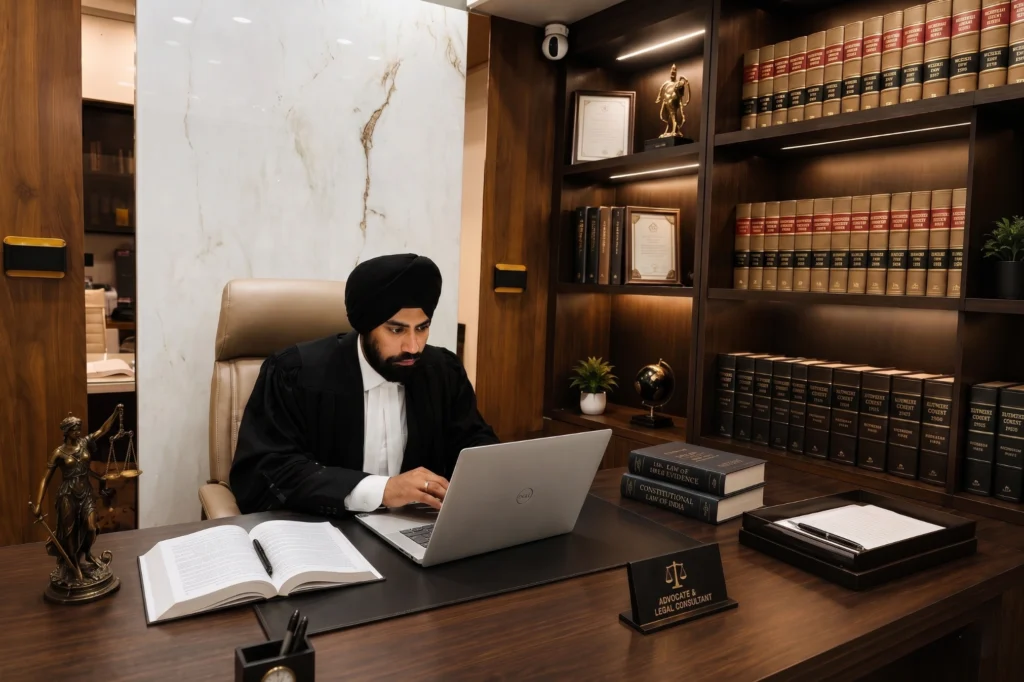
G.S. Bagga & Associates Main Image Working on Desk

About G.S. Bagga & Associates

G.S. Bagga & Associates is a divorce law firm in Delhi. They have expertise with family matters like divorce, maintenance, and child custody in Delhi High Court, District Courts, and Family Courts across Delhi NCR.

The firm is led by Mr. G.S. Bagga, who has over 20 years of experience in divorce cases. The team gives simple and clear legal advice to people going through such situations.

Documents Required for Divorce In India

To apply for a mutual divorce, you will need certain basic documents:

  • Marriage Certificate: A valid and authorised proof of your marriage, such as a court marriage certificate, a Hindu marriage certificate, or Nikahnama.
  • Address Proof: Evidence that will include both your addresses, like an address in your Aadhar card, passport, or voter’s ID.
  • Pictures: Recent pictures in passport size and wedding photographs of both spouses.
  • Income Evidence: Documents such as salary slips, account statements which will prove that both of you have an income source.
  • Separation Evidence: All evidence that can prove that both of you have been living separately, for example, court orders, separate bills, messages and affidavit.
  • Memorandum of Understanding: A written agreement is signed by both of you regarding maintenance, child custody and property.

Common Questions About Divorce in India

What documents are needed to file a divorce petition in Delhi?

There is no set period of time involved. The duration of a contested divorce case in Delhi may range between 1-3 years or more, depending on the number of disputes involved in the case (grounds, custody, maintenance, property), based on the number of grounds being raised, the number of court hearings held, and appeal proceedings.

Yes. If your spouse is missing and unheard of for at least 7 years, they are presumed dead for divorce. You have to prove his disappearance before the court. Once the same is proved, you will be granted a divorce under Sec 13 of the HMA if you had married under the Hindu religion or Sec 27 of the SMA if it was an interfaith marriage. 

The necessary documents include the following: Original marriage certificate/ marriage registration certificate, proof of identification and proof of residence of both parties, and any documentary proof you have for raising grounds for divorce, such as medical reports, messages, FIRs, and witness statements.

India allows you to fight your own case. But, technically divorce cases in Delhi courts have strict procedural steps for documentation, evidence handling and cross-examination. So, hiring a qualified advocate can save you from much stress while your legal rights remain protected.

Can I file for divorce in Delhi if my marriage happened in another city?

Yes, you can under Section 19 of HMA. A divorce lawyer in Delhi can file your case here if you last lived in Delhi or if your wife lives here. You can file the divorce case in a different city from where you got married. 

If your spouse gets a divorce from a foreign court, that judgment becomes valid in India only if it fulfills the conditions under Sec 13  of the Civil Procedure Code. If you were not informed about such a case, the divorce will not be valid in India, as you were not given a fair chance to present your side of the case. 

Once a divorce petition is filed, either parent can apply to the Family Court for an interim child custody order. The court will decide temporary custody arrangements while the case is pending. The guiding legal principle in all child custody matters in India is the welfare of the child. The court will always prioritise what is best for the child over the preferences of either parent.

Yes. Section 24 of the HMA specifically allows either spouse to apply for maintenance during the pendency of the divorce case. This is called interim maintenance or pendente lite maintenance. The court decides the amount based on both spouses’ income, financial needs, and the expenses involved in fighting the case.

Advocate Gagan Singh Bagga – Trusted Family Lawyer for Divorce, Custody and Domestic Violence Cases in Delhi

Have a Question About Your Case?

Divorce is not just a legal process. For most people, it is one of the most important decisions they will ever make. If you have read through this page and need clarity on how the law applies to your situation, speaking with a qualified advocate is the right next step.

You are welcome to reach out to our divorce lawyers at G.S. Bagga and Associates. We are available for initial enquiries and will do our best to give you a clear picture of where you stand.